Guide
The potting mix that works for vegetables — and why bagged mix fails
What container vegetables actually need from a mix, a simple three-part recipe, and how much to buy for the pots you own.
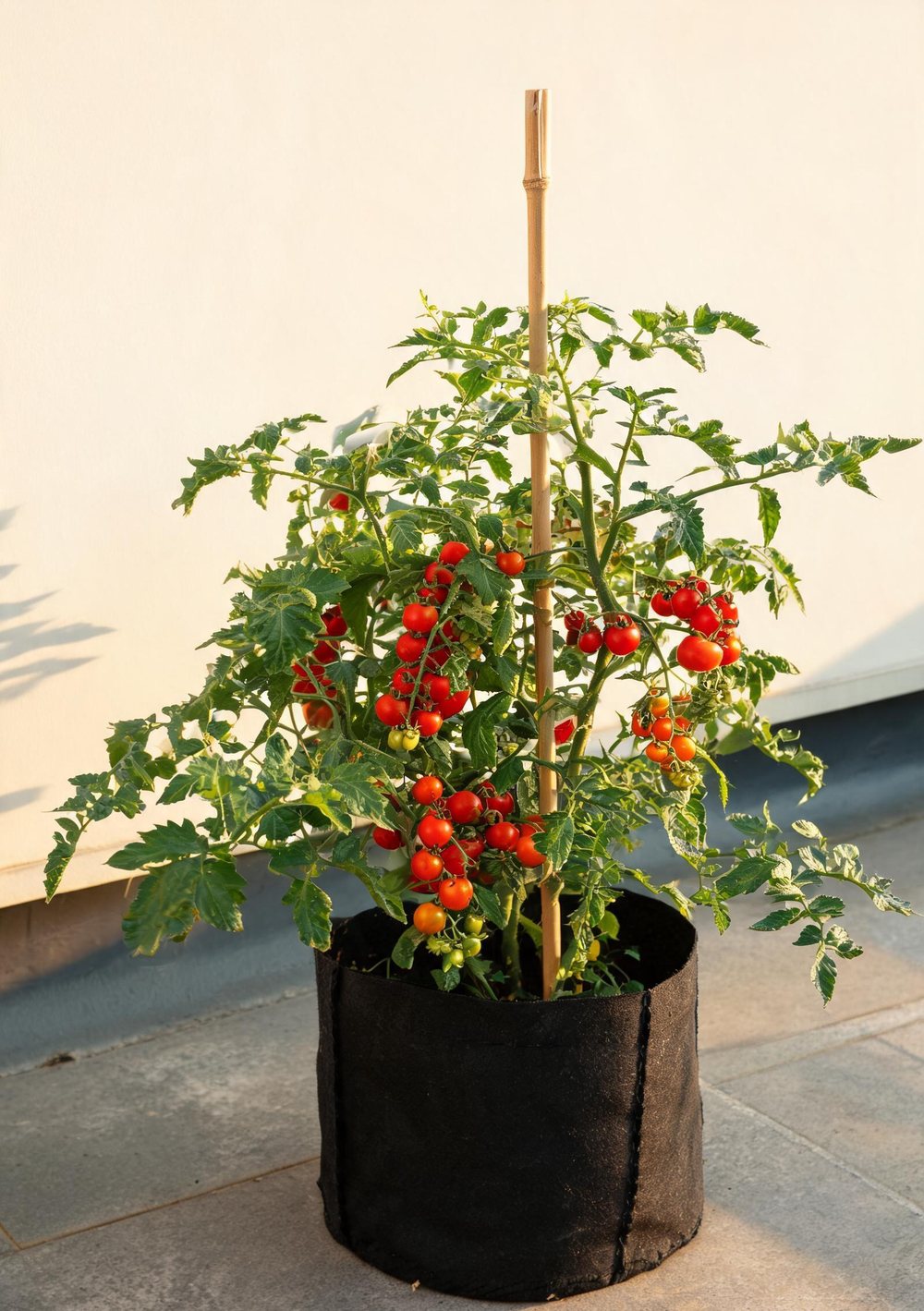
The potting mix that works for vegetables — and why bagged mix fails
Container vegetables fail more often from the mix than from the weather. Garden soil in a pot becomes a brick.
Cheap "potting soil" becomes a sponge that stays wet for a week and then goes permanently hydrophobic. Both produce
the same symptom: a plant that stops growing in July.
Why garden soil fails in containers
- Compaction. In a field, earthworms and roots aerate soil. In a pot, gravity and watering compress it into a
dense mass with almost no air space. Roots need oxygen as much as water.
- Drainage. Field soil holds water too long. A pot with no air in the root zone is a pot where roots rot.
- Weight. Wet field soil is roughly twice the weight of potting mix. On a balcony railing, that is a safety issue.
- Pathogens and weed seed. Field soil brings both. Sterilized mix does not.
The three-part recipe
By volume, not weight:
- 60% base — coco coir or peat, plus a portion of fine bark. Coir is more sustainable and re-wets more easily; peat holds nutrients slightly better. Either works.
- 30% drainage — perlite or pumice. This is the component people skip, and it is the one that decides whether your plant survives a rainy week.
- 10% compost — well-finished compost for biology and slow nutrition.
To 10 gallons of that mix, add:
- ½ cup of slow-release organic fertilizer (roughly 4-4-4)
- ¼ cup of garden lime if you used peat (peat is acidic; coir is closer to neutral and needs less)
- a handful of rock dust or kelp meal if you have it — optional, not a fix for a bad base
How much mix do you actually need?
One US gallon is about 0.13 cubic feet. A standard 2-cubic-foot bag is roughly 15 gallons.
- 2-gallon pot ≈ 0.27 cu ft
- 3-gallon pot ≈ 0.40 cu ft
- 5-gallon pot ≈ 0.67 cu ft
- 7-gallon pot ≈ 0.93 cu ft
A 2-cubic-foot bag therefore fills about three 5-gallon pots with a little left over for topping up. Buy by volume
and resist the urge to fill pots to the brim — leave an inch of rim so you can water without it running straight off.
What bagged "vegetable potting mix" gets wrong
- Mostly bark fines. Cheap bags are largely aged bark, which looks like soil, drains unevenly, and locks up nitrogen as it decomposes.
- Hydrophobic when dry. Peat-based mixes that dry out completely stop absorbing water. Water runs down the sides of the pot and out the bottom while the root ball stays dry. Fix it by submerging the pot in a bucket for an hour, not by watering harder.
- "Feeds for 6 months" claims. That usually means a small amount of slow-release prills that are gone by the time the plant is fruiting. Treat the claim as a starter charge, not a season of food.
If you buy bagged mix anyway — and most people should in year one — choose one that lists perlite as an ingredient
and feels light when you lift the bag. Then add a handful of extra perlite per pot. It costs a few dollars and
noticeably improves drainage.
Feeding from week four onwards
Containers are a closed system with an open bottom: every watering takes nutrients with it. From about four weeks
after planting:
- Liquid feed every 14 days at half to full strength, depending on the label.
- More for fruiting crops (tomato, pepper, cucumber, zucchini) and less for greens — too much nitrogen in lettuce gives soft, bitter leaves.
- Stop feeding root crops like radish and carrot once they start sizing; nitrogen pushes leaves at the expense of root.
Reusing mix between seasons
- Sieve out old roots and the top inch of crusted mix.
- Add 20–30% fresh mix and a fresh charge of slow-release fertilizer.
- Never reuse mix that grew a diseased brassica (kale, cabbage) — clubroot persists for years.
- Do not reuse mix from a pot that had a tomato with blight; compost it in a hot pile or discard it.
Potting mix is the cheapest part of container gardening per unit of result. Getting it right is worth more than any
tool you can buy.